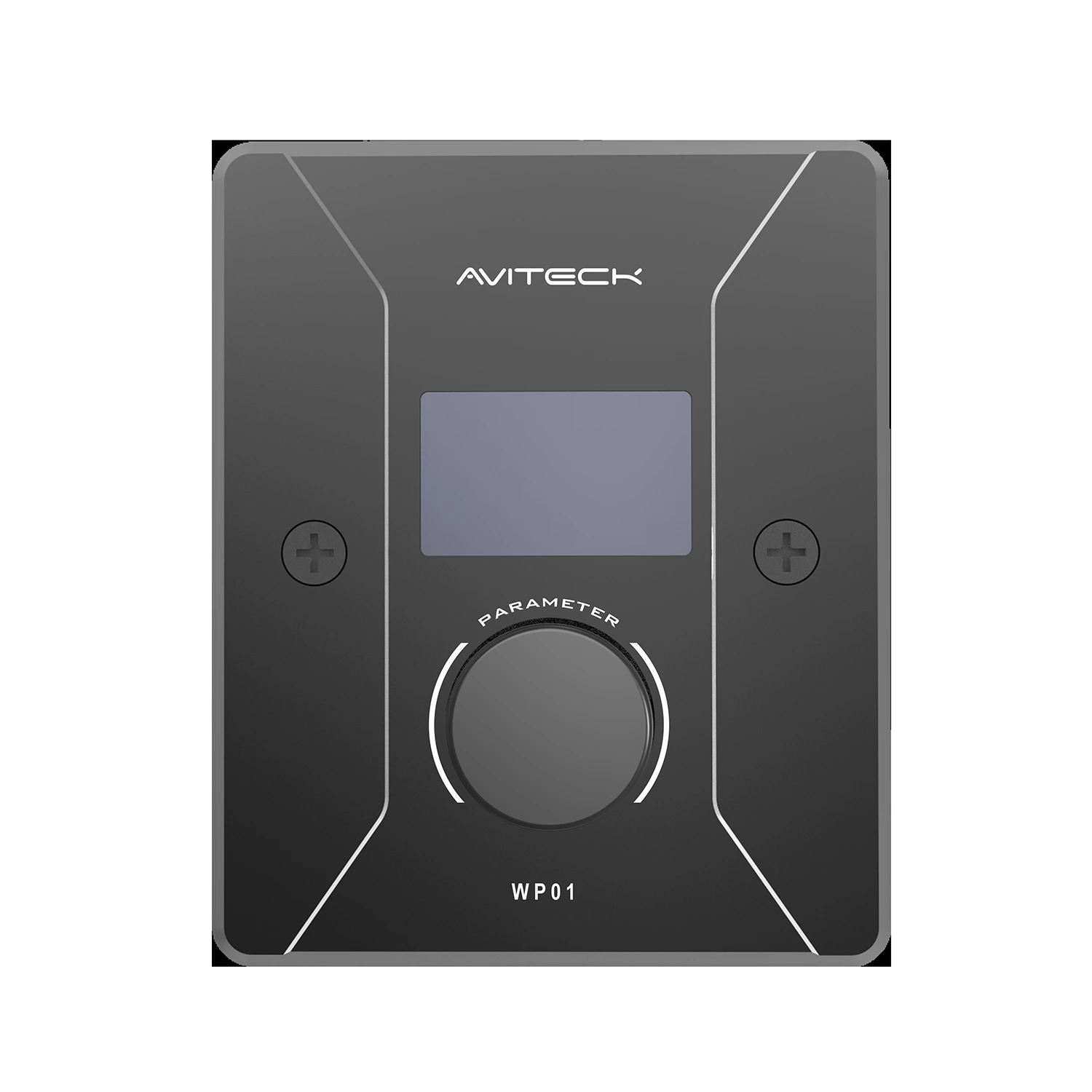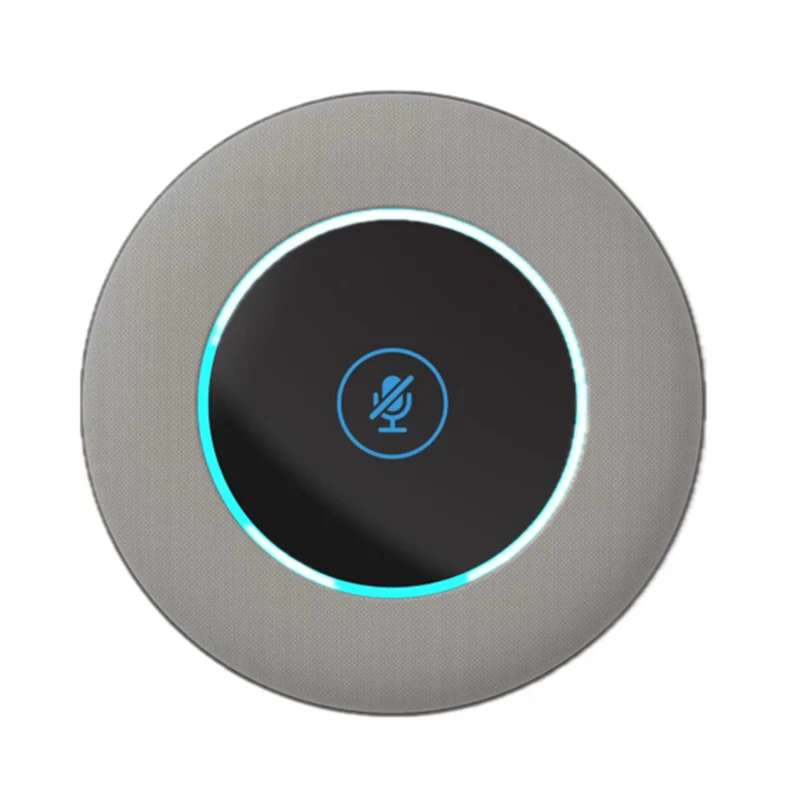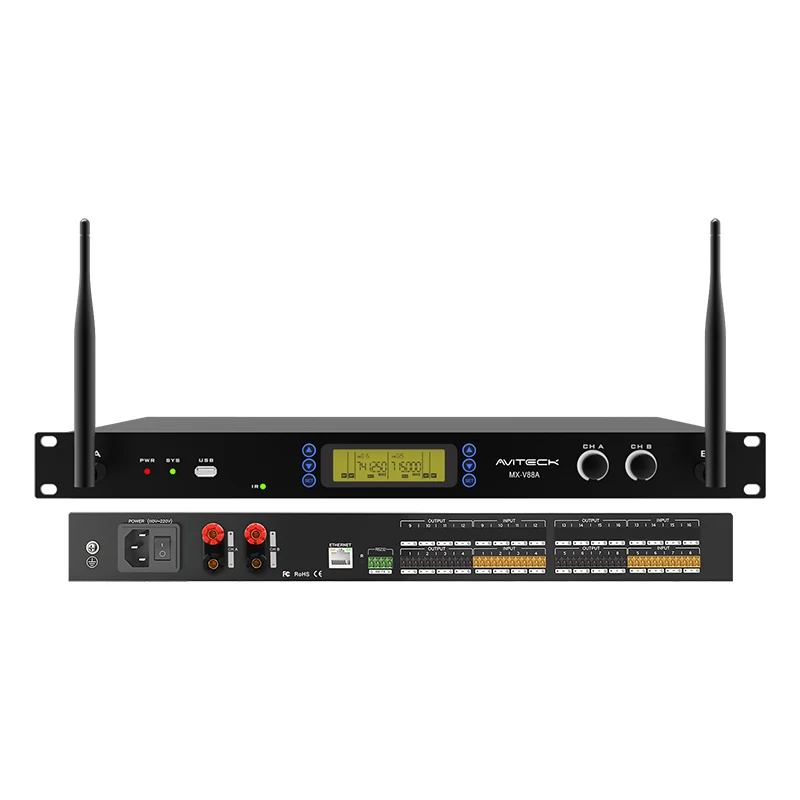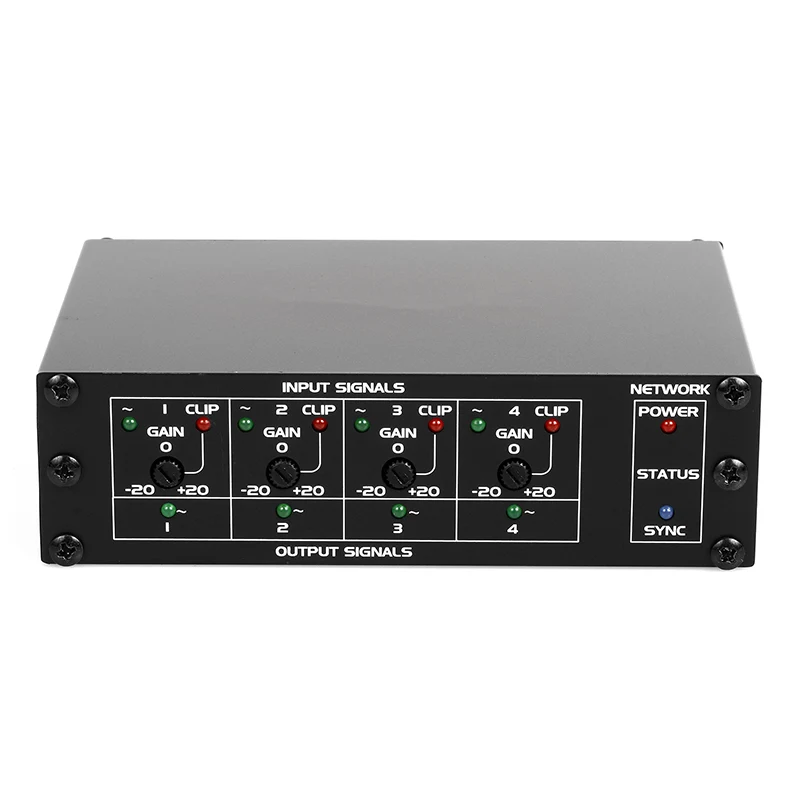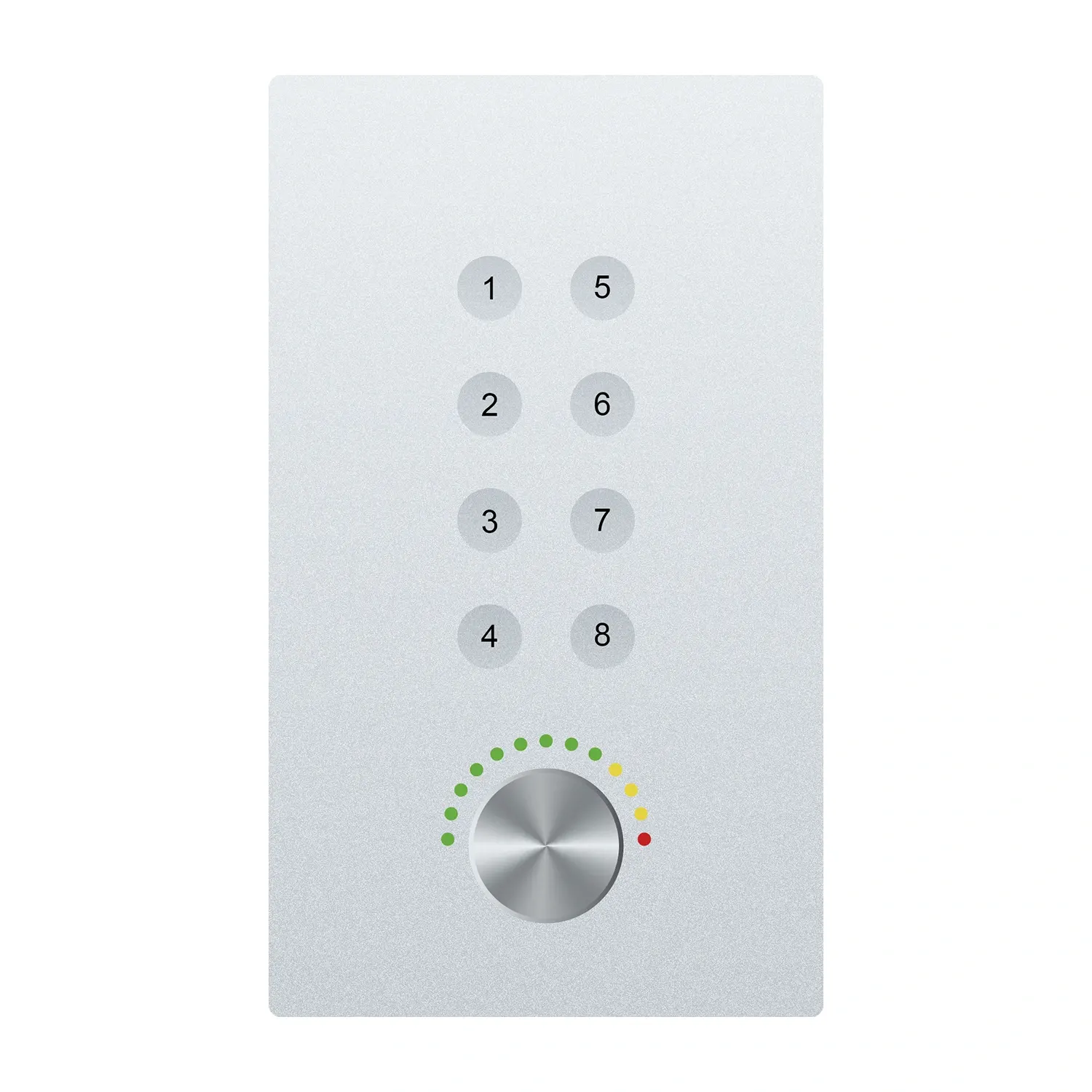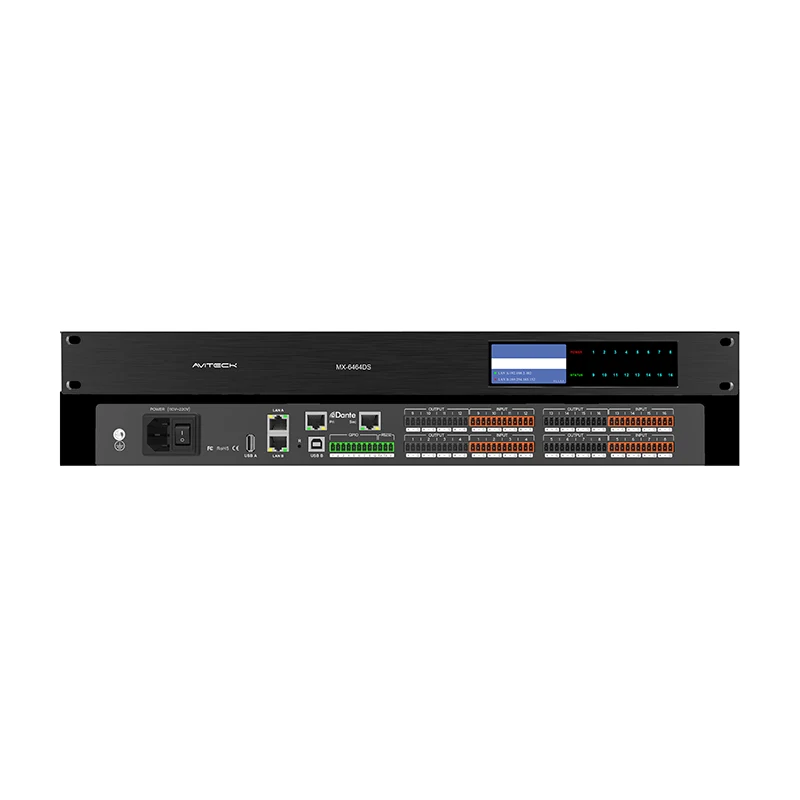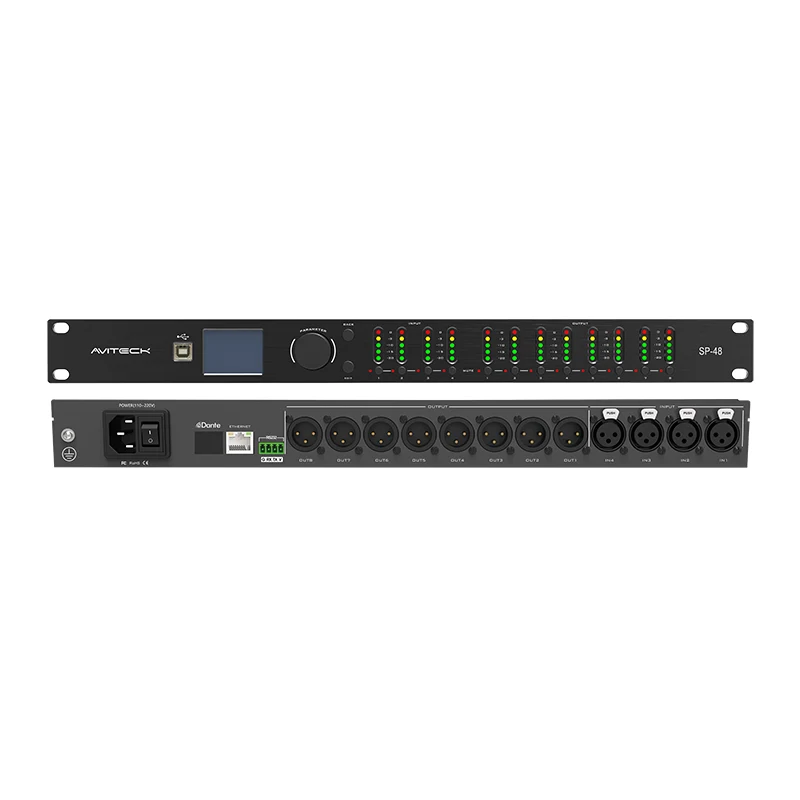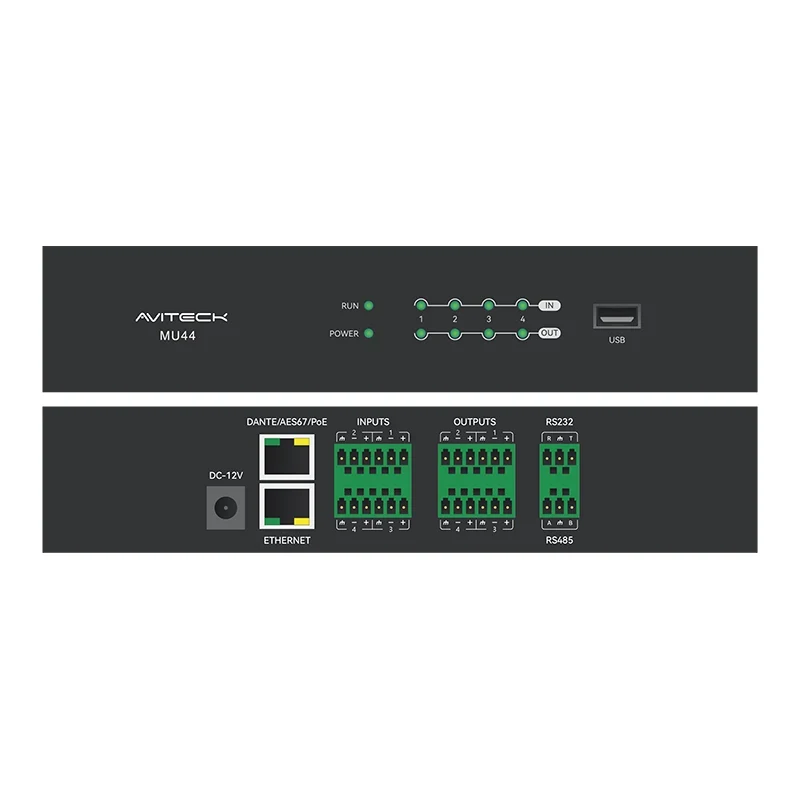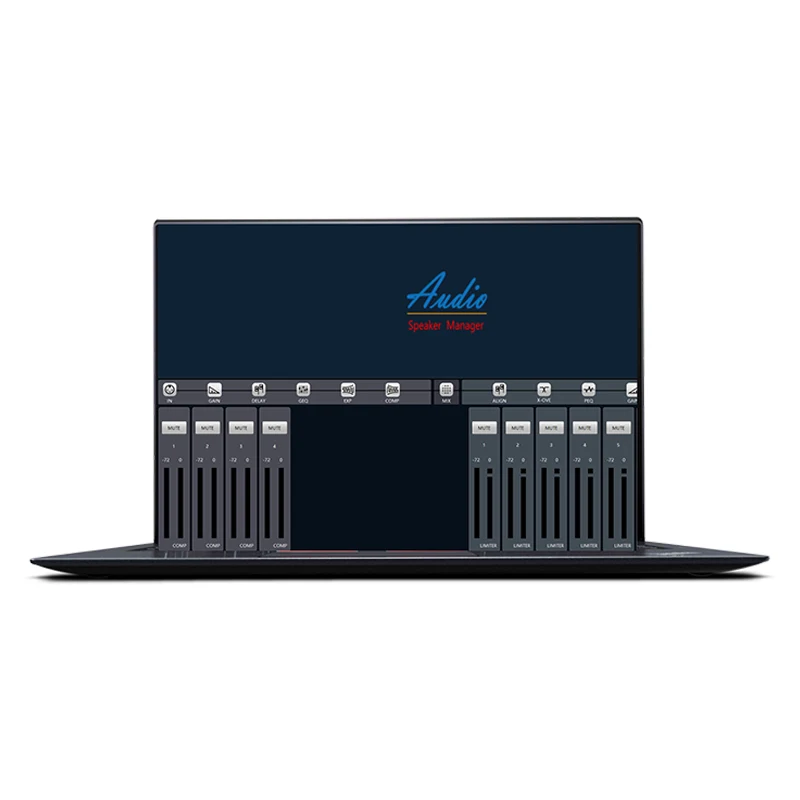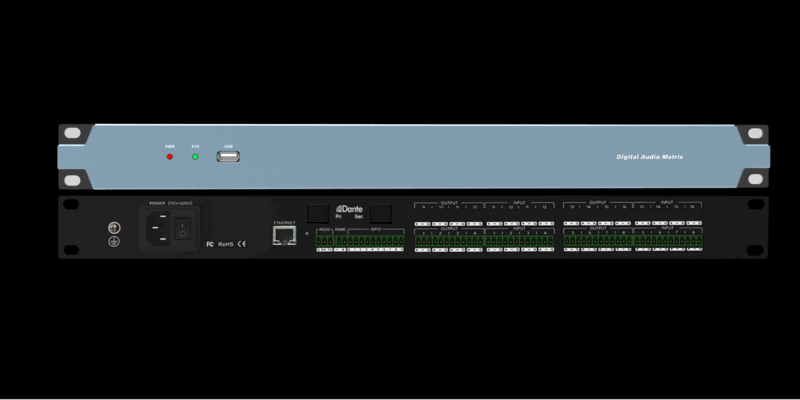

DSP, short for Digital Signal Processing, refers to the technology of processing audio signals using mathematical algorithms executed by digital processors. It is one of the core technologies behind modern professional audio systems.
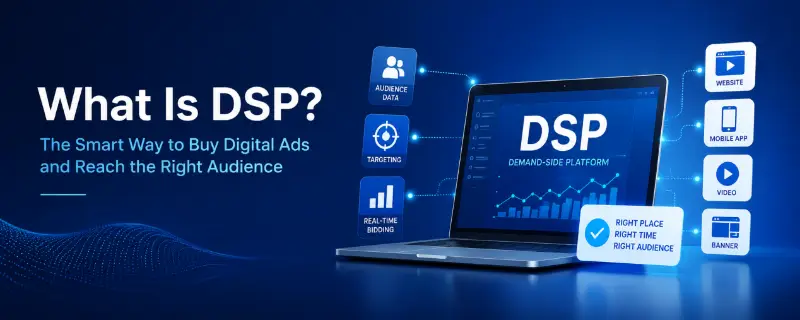
From conference rooms and auditoriums to stadiums, theaters, houses of worship, broadcast facilities, and commercial buildings, DSP has become an essential component of today's audio infrastructure.
Simply put:
A DSP processor is the "brain" of an audio system.
It receives digital audio signals, processes them in real time, and optimizes sound quality, system stability, and overall performance.
Unlike traditional analog equipment that relies on electronic circuits, DSP performs high-speed mathematical calculations on digital audio signals.
A typical DSP signal flow includes:
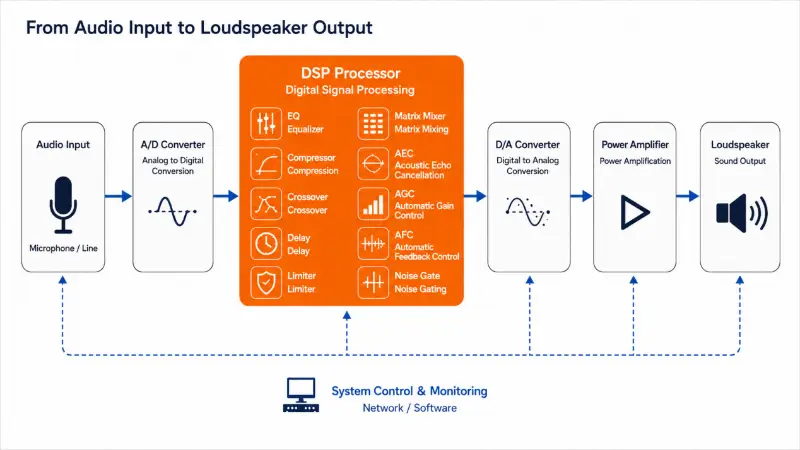
The entire process usually takes only a few milliseconds, making the delay virtually imperceptible.
Modern DSP processors integrate numerous audio processing functions within a single device.
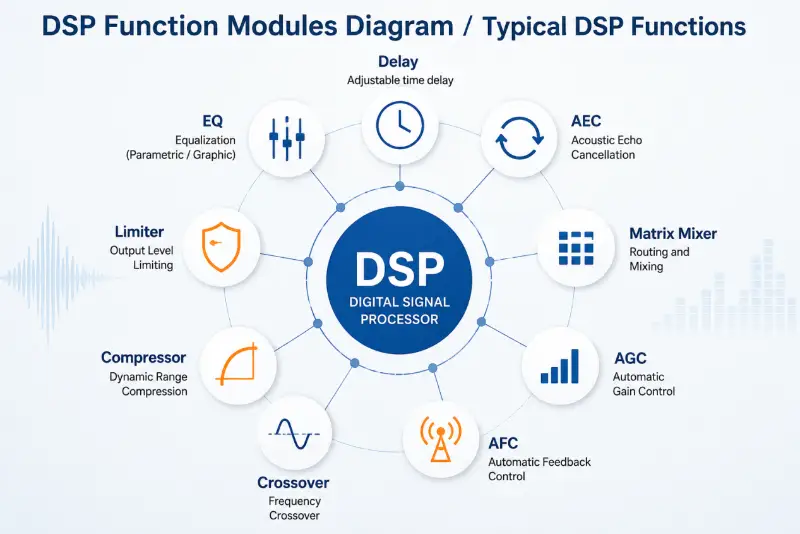
Common processing includes:
Optimizes frequency response and improves overall sound quality.
Typical applications:
· Room tuning
· Vocal enhancement
· Feedback frequency correction
Splits audio frequencies for different speaker drivers such as subwoofers, woofers, midrange speakers, and tweeters.
Time-aligns speakers installed at different distances.
Widely used in:
· Stadiums
· Theaters
· Churches
· Large conference halls
Controls dynamic range to maintain consistent audio levels.
Protects amplifiers and loudspeakers from excessive signal peaks.
Detects and suppresses acoustic feedback before audible howling occurs.
Automatically maintains consistent microphone volume.
Ideal for conferencing and distance learning.
Removes echo during video conferencing and hybrid meetings.
Provides flexible routing between multiple inputs and outputs, making complex audio distribution simple and efficient.
Compared with traditional analog processing, DSP offers significant advantages.
|
Analog Processing |
Digital Signal Processing |
|
Multiple hardware units required |
Multiple functions integrated into one processor |
|
Complex wiring |
Simplified system architecture |
|
Manual adjustments |
Software-based configuration |
|
Limited flexibility |
Highly configurable |
|
Difficult remote management |
Remote monitoring and control |
|
Limited scalability |
Easy expansion and upgrades |
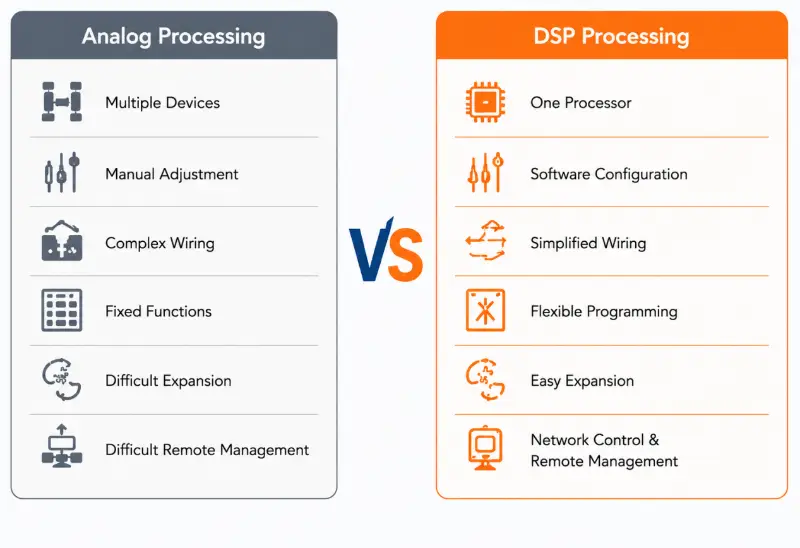
These advantages explain why DSP has become the standard solution in professional audio installations.
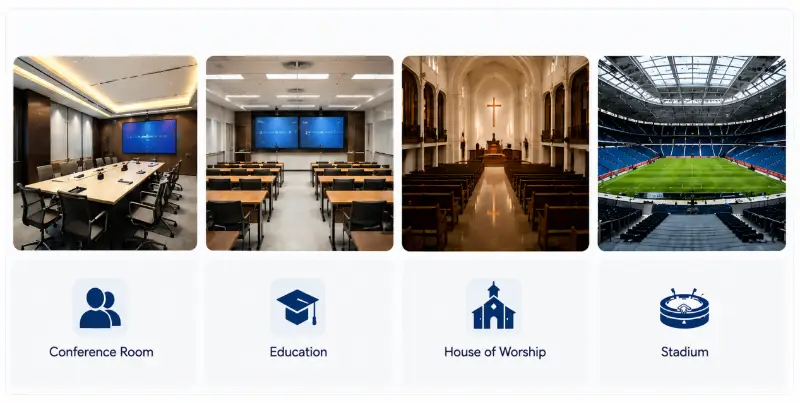
DSP technology is widely deployed in:
· Corporate meeting rooms
· Video conferencing systems
· Hotels and ballrooms
· Command and control centers
· Courtrooms
· Educational campuses
· Houses of worship
· Sports venues
· Performing arts centers
· Broadcasting studios
· Shopping malls
· Public address systems
· Smart buildings
· Airports
· Railway and metro stations
Regardless of project size, DSP helps deliver better sound quality, improved reliability, and greater system flexibility.
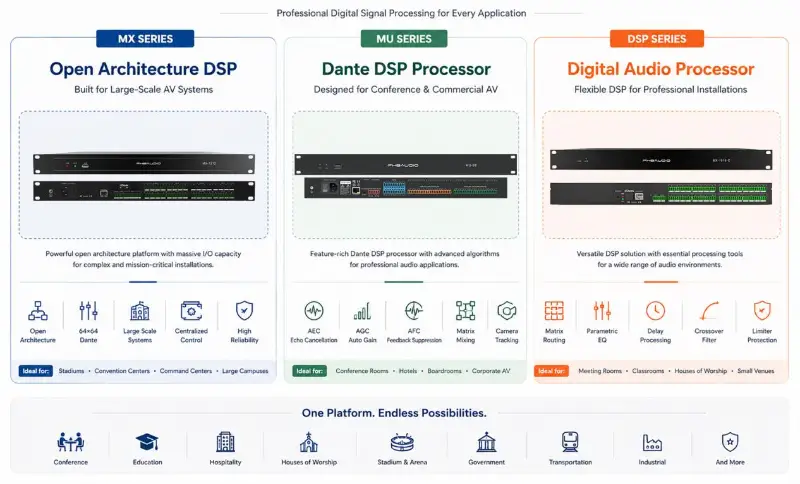
FHB Audio offers a comprehensive range of professional DSP solutions, including:
· DSP Audio Processors
· Dante DSP Processors
· Open Architecture DSP Platforms
· Dante Matrix Processors
· Conference DSP Systems
· Network Audio Solutions
These solutions are designed for conference systems, education, hospitality, commercial AV, transportation, and large-scale professional audio projects.
DSP stands for Digital Signal Processing.
DSP significantly enhances system performance when properly configured, although final audio quality also depends on speakers, microphones, room acoustics, and system tuning.
No.
A DSP processes audio signals, while a power amplifier supplies power to drive loudspeakers.
Absolutely.
DSP solutions are scalable and can be applied in systems ranging from small conference rooms to large stadiums.
· Benefits of DSP
· How DSP Works
· DSP vs Analog Audio Processing
· How to Choose a DSP Processor
· Dante DSP vs Traditional DSP
· Dante DSP Processors
· Open Architecture DSP
· DSP Matrix Processors
· Dante Audio Interfaces
Planning a professional audio project? Contact FHB Audio to explore DSP solutions tailored to your specific application requirements.